Monday, 4 July 2016

How Are You Represented On Google Images?

how-secure-is-apple-incs-aapl-touch-id-from-hackers.jpg


Have you ever searched yours or other people’s names on Google images and photos of your childhood, or some embarrassing screenshot off Snapchat, or a photo you have been tagged in on Facebook show up?  Well I’m here to tell how they get on Google, how you take them down and how letting out our email address to anyone can affect our future. Hackers have shared their information with me on how easy it is to hack these days.


So how do Hackers get on Google images in the first place?
Well believe it or not it starts with your email. If you use the same email for Facebook and Google docs, Microsoft 369 etc Google can get into your Facebook account and take the images you have been tagged in or made into your profile picture etc and put them on Google images. It’s pretty crazy how sharing your email to any website could potentially affect your social media.


So how can you take the images down from Google images?
Well for starters, remove all personal information from Google and restart email. It may take up to one week to remove information. Some websites might still be able to access this information. Different methods involve stopping that problem.


But what I wondered after reading this stuff on giving our email address to Google was if Google can get into our Facebook account by email what if you use Apple ID or ICloud Storage. Could Google potentially get into our Apple account, look through our front camera and get our credit card details?


ICloud hackers have known for years of an easy way to identify the email address behind an iCloud account. Finding an email address may not sound particularly valuable, but once iCloud hackers know the email address behind an account, they’re one step away from gaining full access to the account and raiding its photo backups.


What I’m trying to say is be careful who you share your email address with online. Once something is online it is no longer private.


Sources
https://images.google.com/

What is considered acceptable for a girl or guy to post on social media? - Abby and Lucy

Acceptability on Social Media
We have become obsessed with telling or showing others how we feel through posts on social media. Even though we may not realise we judge everything we see, that thing your best friend posted or a rant from someone you hate, some of these things are just generally unacceptable, but it’s all based on opinion. We wanted to find out if everyone had similar thoughts on these things.
https://www.timeshighereducation.com/sites/default/files/istock_000040645286_small.jpg

From our survey we found that for majority of people they thought both guys and girls have different standards on social media. One thing that was noticeably different between the two genders was the ability to post photos showing a lot of skin. The survey showed us that most people thought it was more socially acceptable for a guy to post a photo of them showing a lot of skin with only 33 votes compared to 49 votes for girls. This to us was the most interesting part of the survey as we hoped people wouldn’t have double standards.

The reason behind this is that woman are quite often judged for their bodies in today’s world and sadly this is not carried over between genders. On another note photos of them drinking or at parties gathered an equal response. Political statements surprisingly were more acceptable for girls to post and not guys with 29 to 23. Our survey has given us some interesting information on what people want to see and how much we judge others on their posts. It is all based on what society deems acceptable, we are society.

Tinder - Lyllia and Emily

https://lh3.googleusercontent.com/-SW4ZTbjwFXjEhbu2TpRkC-j9Bre8PD6pkQ8OcFxxKP0yG0fijxBqE_7btXO8HtEzNHKX7yPuTevoFrgbowtK29D9UT9WsZl2iMukZ5x2-6f7zRKBszZDJ9wc5CDNN9OTpIyRp6_
https://lh6.googleusercontent.com/EMbGuRXTJbUyDaYnE4jTZ0MbvD-aJkRvb-l_PnY3z4bp_4Dm9dF_ill0YKpGLSKeS5ZKDQmyKwEe29g7rqMEn99WcB70H56MxIvKcVPSy00jGP-tDvI916tOlLm3uet45c7suX8k


Do YOU use Tinder?

Recent Surveys at NCG:


The majority of students at NCG using Tinder were from Years 12 and 13. Many of these students used it as a joke however, a few did use tinder to find a potential match. Although many students from Years 7 to 11 did not use Tinder, most of them knew about Tinder through their friends, the media or just their own curiosity. And an even higher number of students claimed that they would want to use it in the future. For many of the students surveyed they believed that the right age to be using Tinder is 18+.


POSITIVES OF TINDER

http://cdn.someecards.com/someecards/usercards/1329579890051_8444928.pnghttp://drjameswellborn.com/wp-content/uploads/2013/02/Teen-couple-in-love.jpg


http://www1.theladbible.com/images/content/5553c9935c302.jpg
https://static.squarespace.com/static/51b3dc8ee4b051b96ceb10de/51ce6099e4b0d911b4489b79/51ce61f9e4b0d911b44a8353/1303420352094/1000w/Bert2mail.jpg


CATFISHING!!!
Here are some entertaining (and rather funny) catfish stories:


And maybe if you’re actually on Tinder 😉 and you think someone is catfishing you, here are some useful websites to help you get out of this sticky situation:


Instagram vs Reality - Edie Porter

Instagram vs Reality
---------------------------------------------------
Does social media reflect reality? The answer in most cases is NO.
The majority of people, especially Instagrammers with large followings, only post what they want you to see, or the ‘best bits’ of their life.
But didn't we already know that? The idea of portraying yourself on social media to have a perfect life has been around for almost as long as social media itself. With many big Instagrammers on the rise, it’s hard to not envy their outrageously cool lives, given the content being posted is inspiring and aspirational. However this ‘envy’ can be damaging to our self-esteem while wishing we had the same experiences or possessions as them.


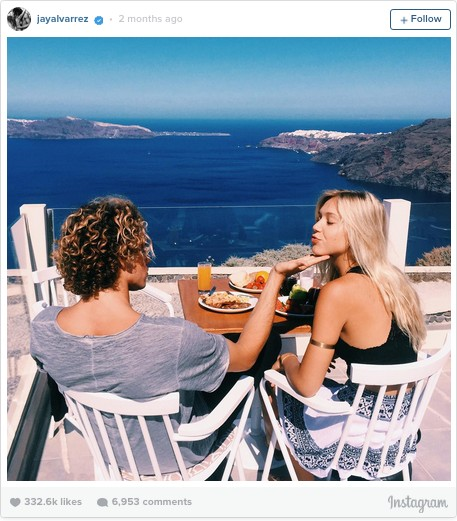
If you have an Instagram account, you probably have come across Jay Alvarez and Alexis Ren, who are young American Instagrammers / models with a massive influence on the internet.
They collectively have 9.2 million followers on the site.
Their vibrant pages boast flash cars, beautiful beaches, skydiving snaps and cute couple photos in international destinations.


For Jay and Alexis, it’s great that they are privileged enough to live a luxury and adventurous lifestyle, and it's awesome that people are feeling inspired by their photos and videos.
Sometimes when these lavish posts appear on your feed, it can cause reflection on your own life and often jealousy. These photos draw in thousands of comments along the lines of “relationship goals” or “why is my life so boring” This is called instagram envy, and it’s starting to become a big problem of our generation.


Even though we hardly know anything about these people, we are comparing ourselves and our lives to theirs.
Although they do have incredible experiences and privileges, I’m certain not everyday of their life is that exciting. What we are not seeing is the arguments, the lost luggage, hangovers and so on.
Afterall they are only human, and everyone has their ups and downs but they choose not to showcase the ‘downs’
It’s also important to remember that Instagram is their JOB, they are models and they are making money off showcasing their experiences and their relationship.

ONLINE INAUTHENTICITY
--------------------------------------------------------
It is not only celebrities who are the culprits of online inauthenticity. Everyone does it, often subconsciously. New technology and apps are easily accessible allowing any of us to retouch or filter images.
It’s hard not to scroll through Instagram and feel suffocated with fabulousness.
One friend may be skiing in France with their family, someone else showing off their six pack with a mirror selfie and another friend showing off their fancy restaurant plate.   Followers on Instagram are expected to give the photo a heart shaped ‘like’. The number of likes you get on a photo is similar to a form of social validation.

The danger of Instagram is that it makes it very very easy to tell partial truths. Therefore allowing us to showcase our life in sugar coating.

BODY IMAGE
---------------------------------------------------------------
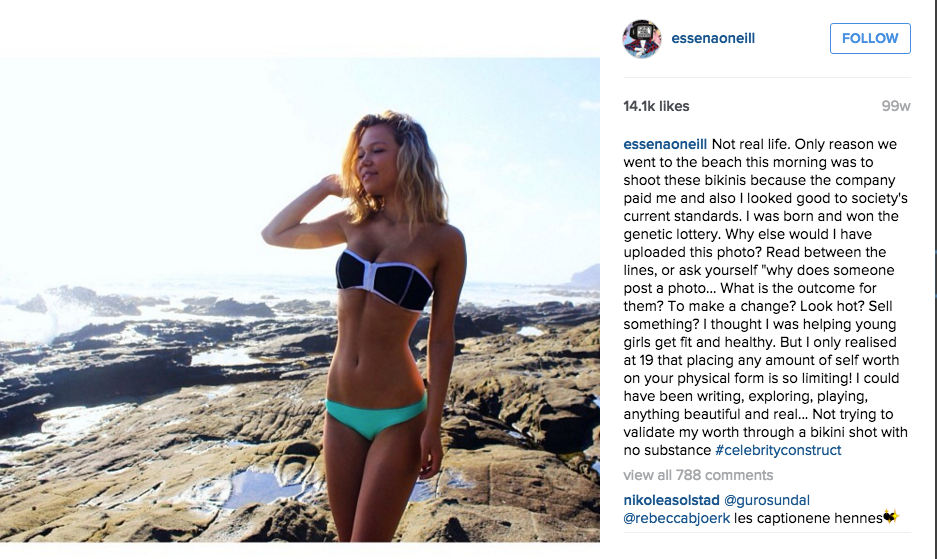
Society’s idea of the ‘perfect body’ has dramatically changed since the rise of Instagram, and with all of the edited and curated content on the app many young women and girls’ self-esteem is affected. Last year, Instagram blogger Essena O’Neill, quit social media because it is “contrived perfection made to get attention”. Before deleting her Instagram account, Essena edited the captions of her older photos, to show what really goes on behind the ‘flawless’ photos.

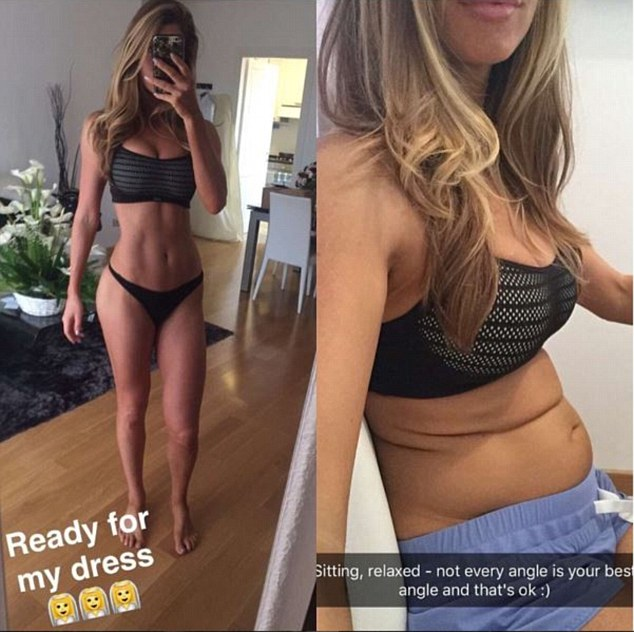
“Only reason we went to the beach this morning was to shoot these bikinis because the company paid me and also I looked good to society’s current standards.” she wrote. It is refreshing to see someone with as much influence as Essena reveal how deceptive Instagram can be. The flawless body photos we see are often staged, photoshopped and one of hundreds taken to get the best angle.


Self-worth should not be validated by what others think, but instead within ourselves. Next time you’re scrolling through Instagram and feeling bad about your appearance, your life or your income remember
Self Esteem starts on the inside and radiates out.
In summary, acknowledging that social media is not real is the first step to disconnecting the online world with our real life expectations. Life is not about what you choose to showcase in the glossy online world, it comes from the real one full of tears, laughter, honesty and love.

Sunday, 3 July 2016

Everything bad about Social Media - Charlotte Mount


Everything bad about Social Media
https://s-media-cache-ak0.pinimg.com/236x/41/69/d5/4169d5054401df50a57e96e05d461a71.jpg
Every single day, every hour, even every second people from all over the world are clicking buttons and sharing their life with the universe. When we login, share a photo and scroll through our feed we think of social media as being harmless. However, do we really know what we have gotten ourselves into when we click open that one app? I can tell you now, there’s no doubt that social media has done many great things in our lives so far. It’s helped us reconnect with friends and family and share memories to keep and look back at forever. But there are dangers that every single one of us, even you encounter on social media that we aren’t conscious are attacking us.
Social Media wastes your time:
http://socialnewsdaily.com/wp-content/uploads/2013/03/foursquare.jpgSocial media is an addiction. We may not realise it but the average person can be so engrossed in other people’s lifestyles instead of their own its like time has frozen around them and all there is in the world is them and their device. However, we know this isn’t the case and time will carry on no matter what is so interesting about the Kardashians that has caused millions to stop and stare.
  • The average person spends 23 hours a week on social media and other forms of communication, that’s nearly 14% of your time a week!
  • Over 5 million of Facebook users are under the age of 10! As they grow they will have spent a phenomenal amount of time on social media.
  • Journalist Toma says, "You spend so much time creating flattering, idolised images of yourself for that one perfect picture, but you don't necessarily grasp that everyone else is spending a lot of time doing the same thing. The more you do that the more distorted your perception is that their lives are happier and more meaningful than yours."
Social Media can make you emotionally unstable:
  • An experiment was done by two German universities. They did a survey to see how people felt after using social media. You would think that after using social media most people would feel refreshed and happy after 'socialising' with friends, however they discovered that many people were stating they felt confused, angry and lonely.
  • http://socialmediaimpact.com/wp-content/uploads/2013/08/looking-bad-feature-540x264-social-media.jpgApart from cyber-bullying this is because of people putting themselves down after seeing photos of people who look like they are living 'the perfect life'.
  • If this is really the way a large quantity of people feel like after using social media then why is the social media population growing instead of decreasing?
Social media can make you fat:
Social media is known to alter your appetite.
  • We have all experienced scrolling through Instagram or Facebook and coming across an image of a certain type of food that looks so good that you start a craving. For most people this craving is usually for some sort of sugary food.
  • Research shows that photos of food can activate the award system in your brain; your brain then starts to make up reasons why you deserve to treat yourself after seeing that one photo.
  • This then leads to unhealthy eating and cravings which can make you gain weight over long periods of time.
Social media can make you broke:
Social media influences a lot of the decisions we make today, most of which we don't realise we're doing.
  • New research suggests that people who spend large amounts of time on social media have lower self-control which then leads to spending a lot more money.
  • Columbia professor Keith Wilcoxtold says, "It’s not about don't spend time on Facebook, but just be aware of what it might be doing to you."
How can we can turn these negatives into positives?
We can turn all of these negatives into positives surprisingly easy. All we have to do is be aware. By being aware of all of these effects social media might be having on you can change the way your life revolves around the apps on your phone.
No, social media isn’t a disease; however, it’s how we use social media that is something we need to be careful and conscious about.
Bibliography:
  • Written by Charlotte Mount


-        Written by Charlotte Mount

Friday, 1 July 2016

Facebook on TV?


When you think of social media you probably think of being on Facebook, Instagram, Snapchat etc but do you ever think of how it's used in TV shows? How the characters use it? How it affects characters relationships? How big a part of the story it is? These are things that I decided to investigate. I chose to watch one season of a show, the show I chose was the Flash. Obviously there are some shows that will have absolutely no social media because of when they are set however there are more and more TV shows coming out that are set in the present, future or close past. In all these shows you can you can see evidence of people using social media. 

Examples of this are: In Sherlock, John Watson writes a blog about the things that he and Sherlock investigate. In Supernatural Dean and Sam visit lots of different sites all the time to find information including sites where people talk to each other and share information. These are only a couple of examples however in majority of the TV shows that are set in modern times you can find some form of social media being recognized.  

In the Flash there is one particular form of social media that is used throughout the first season, this is a blog that is used by one of the main characters as a way to share information to other people who are interested in the same thing and so that they can receive information from other people. The character that uses it is one of the main female characters who is portrayed as a strong and confident young adult which can help some people in real life to see that anyone can blog and its not just for someone who might be shy or not confident that what they are writing isn't good enough. Throughout the season she is confronted by a lot of people that are close to her that are telling her to stop writing and she gets frustrated at all of them for not supporting her in something that she found she enjoyed. It helps people in the real world to not give up even when your friends and family are not believing that what you are doing is going well or that you are good enough to be doing it, whatever it is this doesn't just apply to blogging this can apply to starting fan account on Instagram or starting a YouTube channel.  The character also uses it as a way to contact someone which turns out to be positive and negative because the other characters didn't want to have a close relationship with her because they thought it could get her hurt. For a while the character doesn't sign their name to the blog and as soon as they do they have someone coming after them, showing that social media can get you into trouble that you thought wouldn't happen from doing something so simple as signing your name onto a post. There was a positive side to it however, from writing the blog the character was able to receive information from  anonymous and non anonymous people about the thing that they were interested in, information that would have otherwise been very hard for one person to gather themselves.
  
Both pros and cons come from using social media which is evident in real life. The Flash has done well to make the consequences realistic which could help a lot of people to make some decisions on what they post onto social media. They can see what could happen if they give up some of their personal information although not as fictional or as extreme as some of the consequences in the Flash. However a lot of what happens in the Flash is just an exaggeration on what is completely possible.

Overall TV shows have included social media in their shows as a way to help show what can really happen to people in real life and the consequence you face when posting anything on the internet. Any sort of personal information you use or put onto social media can be used against you even when its something as small as your name can lead some people straight to you. The Flash also shows us that anyone can use social media even if they may feel like they are not good enough for people to read or watch or look at and that no matter how much people might judge you and shoot you down you should try it. Even if it doesn’t work out you can say you gave it a go. 

By Loren Emerson